Should I tell my employer about my chronic illness?

You are trying to decide whether to tell your employer about a health condition that affects your work.
.What you tell your manager about a medical condition is one of the most practical decisions you will face. Most people make it without clear guidance or knowing what the options are
If you don’t say anything, you carry it often silently and on your own. If you share, you don’t fully know how it will be received or what may change after that.
However, it’s not black and white. You can decide what you share, when, and with whom in stages.
How to decide
There isn’t one right answer to whether or how to disclose.The decision depends on what is true for you right now.
A few things are worth being clear on before you decide:
What would change if you said something
Would anything at work actually need to shift for you to keep doing your job? If nothing needs to change, the decision sits differently than if you need support, flexibility, or adjustments.
How stable things feel
If your capacity is relatively stable, you may approach this differently than if things are fluctuating, or becoming harder to manage.
What kind of environment you are in
Some workplaces are easier to navigate than others. You will have a sense, from what you’ve already seen, how things are handled and how people communicate.
Do check out the disability policies as they will apply to chronic illness, even if you educate your manage on that. Don't forget many chronic illnesses can also be described as dynamic disability.
How much you want to carry on your own
Some people prefer to manage things privately for as long as they can. Others reach a point where that is no longer sustainable.
You don’t have to decide everything at once. You can take this step by step.
Before you decide
There are also things you can get clearer on before deciding whether to say anything at all.
Understanding your capacity
Having a clearer sense of what you can realistically sustain makes it easier to know whether anything at work needs to change, and what you would be asking for if it does.
Knowing what support would actually help
This might be flexibility, adjusted expectations, or changes to how work is structured. Sometimes it is more about how you do the work (which tasks, when). Being specific, even privately, makes the decision more grounded.
Separating diagnosis from impact
You don’t have to explain everything about your health. What matters at work is how it affects your capacity and what supports the optimal way for you to work.
Considering timing
You can choose when and how you share information. It doesn’t need to happen all at once, and it doesn’t need to happen immediately.
Saying something can allow practical changes to be put in place. That might include flexibility, adjusted expectations, or clearer communication about capacity. In other situations, nothing formal changes, and work continues as it is.
You don’t need to tell someone everything at once. You can start with partial disclosure and see what evolves.
How information is handled
You get to decide what you share, and then different workplaces manage this depending on their culture, policies and manager communication style.
In Australia and the US, employers are required to keep health information confidential and only use it for work-related purposes. Chronic illness is covered under disability law.
In most cases, you are not required to disclose a medical condition unless it directly affects your ability to do your role safely. This means you can choose whether to disclose a medical condition in many situations.
What happens after
Disclosure is not a single moment.
It can lead to a one-off adjustment, an ongoing conversation, or no further action at all.
You can control how much you share each time.
What you carry on your own
If you don’t say anything, you may continue managing things independently.
For some people that works. For others, it becomes harder over time, especially if something needs to change at work and there’s no way to name it.
Where the Career & Chronic framework helps
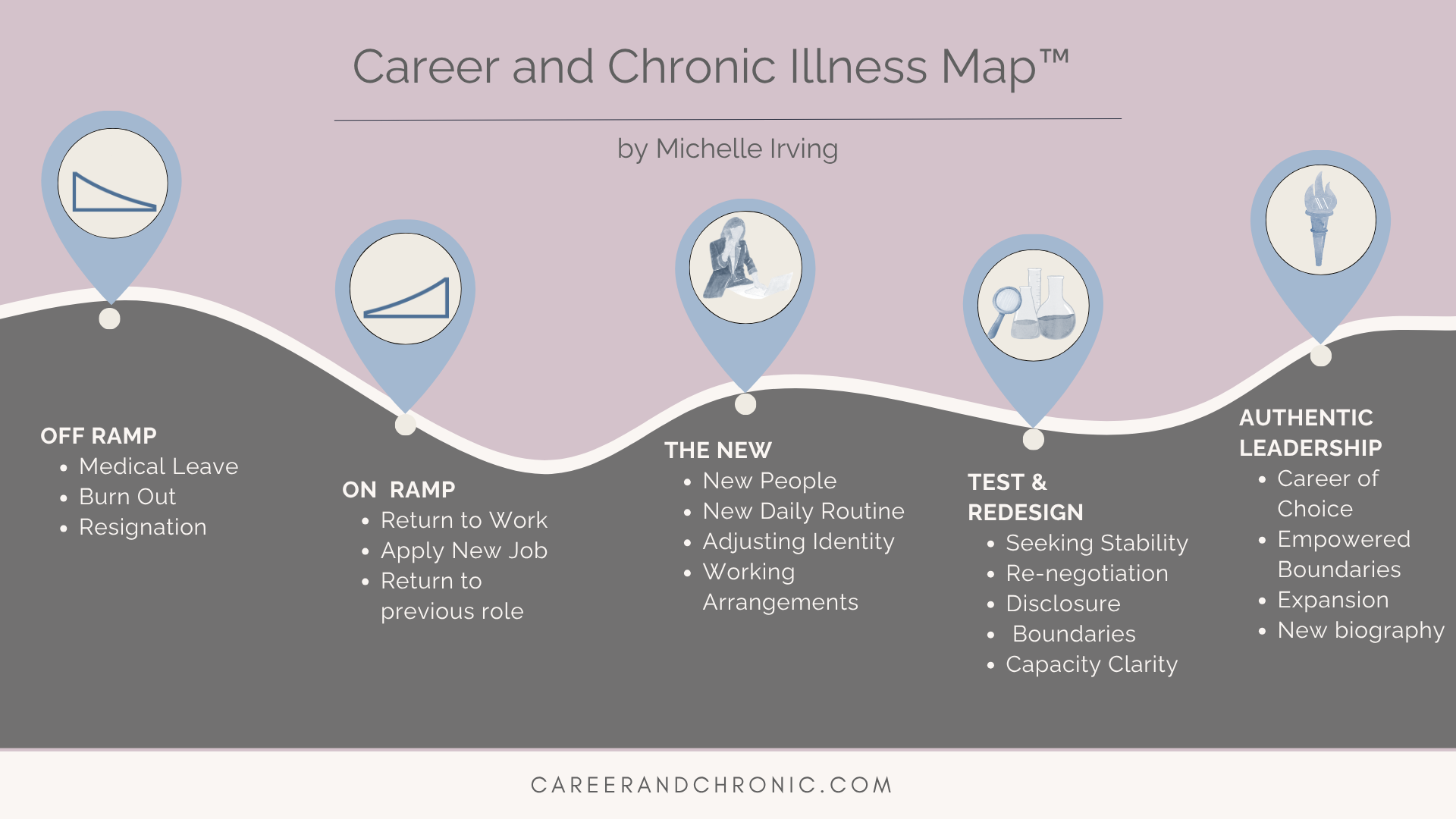
What you tell your employer, when, and how is an ongoing part of working with chronic illness.
Where you are in that process changes what disclosure means, how you maintain agency within it, and what you need from it.
The Career & Chronic Map™ lays that out. It shows the stages people move through and how decisions like this shift depending on where you are.
Understanding where you are can make this decision clearer.
You can explore the Map here.